ADA Requirements for University Shuttle Contracts: Vehicles, Boarding, and Driver Procedures
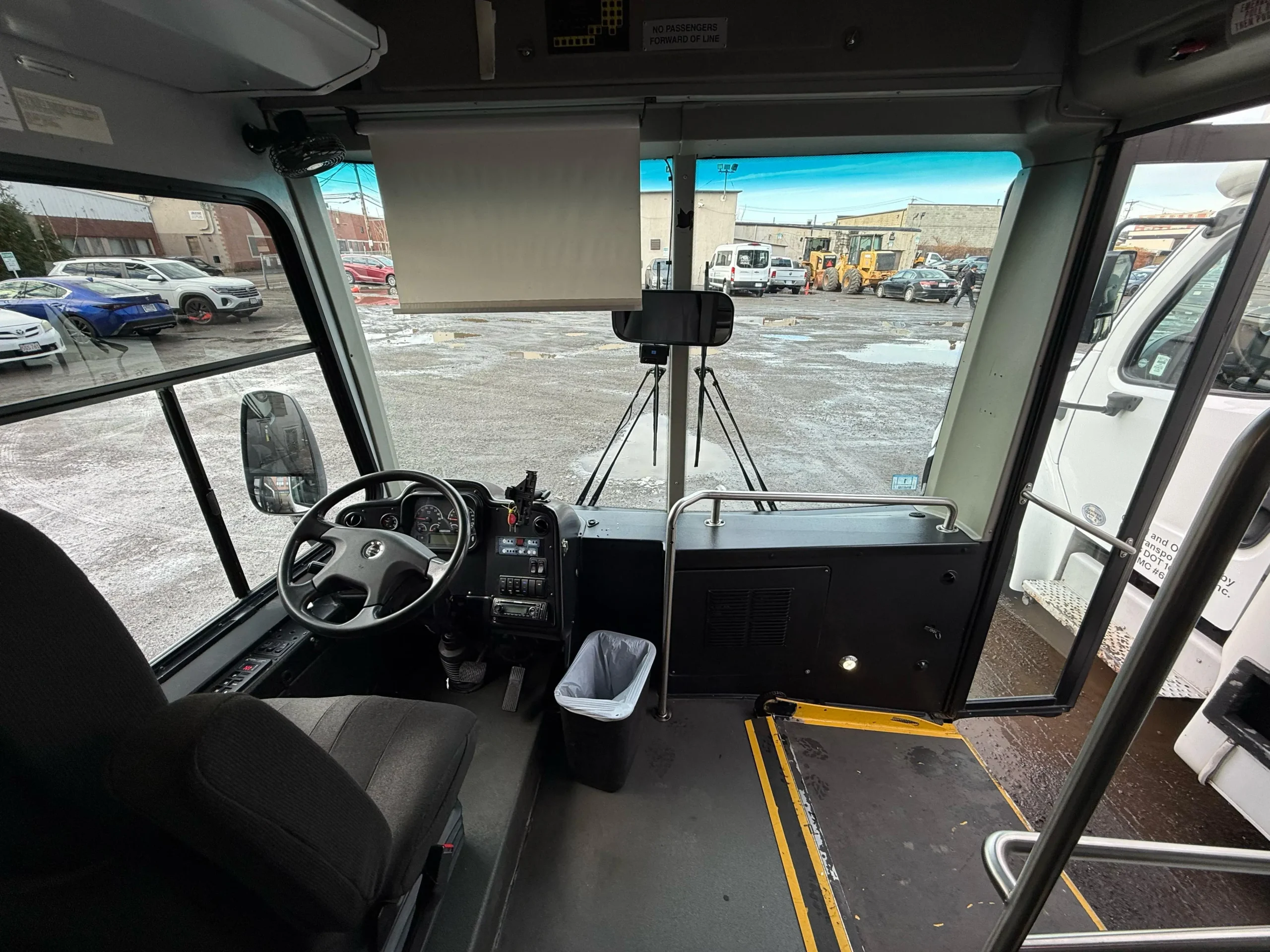
Transportation accessibility is not “extra credit.” It is a core operating requirement. This guide explains what to require in a university shuttle contract so riders with disabilities can board, ride, and get information reliably, and so your team can verify compliance in operations. It covers all ADA requirements, vehicle specs (lifts/ramps, securement), boarding and service rules (including service animals), and driver training and procedures, with sample RFP language and a contract-ready checklist grounded in DOT ADA rules.
Why this belongs in the contract (not just operations)
Two realities make this contract-critical:
- Disability is common. CDC estimates 28.7% of U.S. adults have a disability (more than 1 in 4).
- ADA compliance is a service-delivery system. If a lift is down, a driver is not trained, or securement is inconsistent, the “accessible” shuttle stops being accessible in practice. The DOT ADA rules explicitly tie accessibility to maintenance, use of equipment, and training to proficiency.
The ADA framework universities should reference
When you see “ADA requirements for university shuttles,” you are usually dealing with three connected pieces:
- 49 CFR Part 37: DOT rules for transportation service for individuals with disabilities (service requirements, maintenance, training). transit.dot.gov+1
- 49 CFR Part 38: vehicle accessibility specifications (lifts/ramps, securement, etc.). eCFR+1
- Access Board guidelines and ADA Standards: technical foundation that DOT adopts/enforces for transportation vehicles and facilities. Access Board+1
Practical note: Public vs private university obligations can differ by legal title, but the safest contracting approach is to require the operator to meet the DOT ADA transportation rules for the shuttle service you are buying and to document it. FTA’s ADA guidance circular is a useful “how to comply” companion when drafting requirements.
1) Vehicle requirements to write into the contract
A. Lifts and ramps (boarding devices)
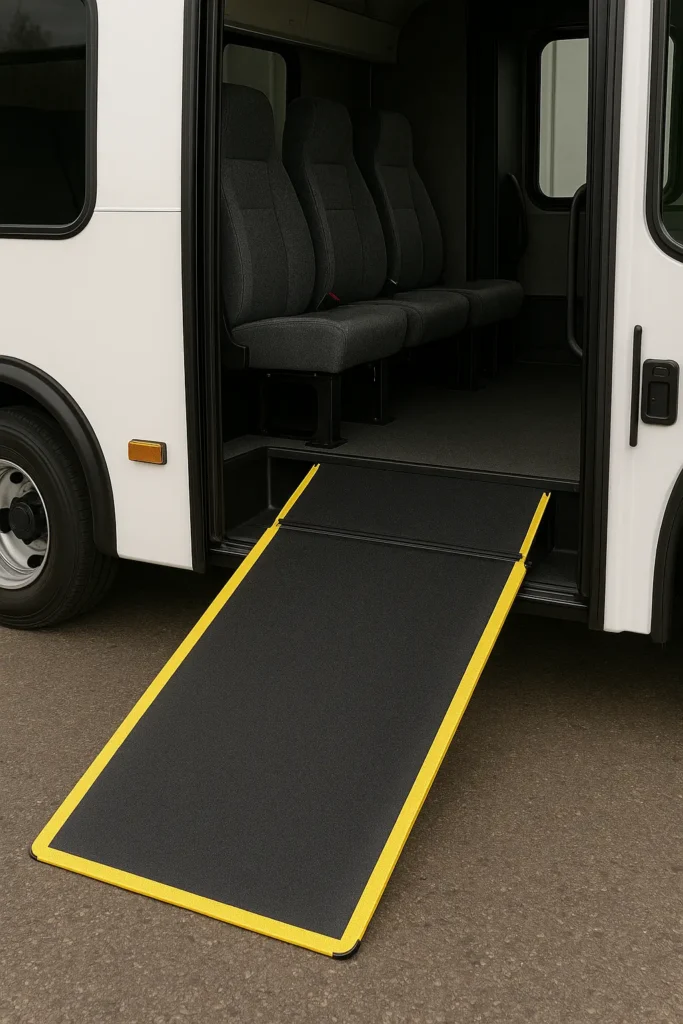
For a campus shuttle to be meaningfully accessible, the vehicles need a working boarding device and usable boarding surfaces.
Useful spec-level facts you can cite in an RFP:
- Vehicles need a boarding device such as a lift or ramp to allow wheelchair users to reach the securement area.
- ADA National Network notes lift design details such as minimum design load of 600 pounds and lift platform accommodation (commonly cited as 30 in x 48 in).
- DOT’s Part 38 includes detailed lift safety features such as barrier requirements.
Contract language tip: Require lifts/ramps to be present and to be demonstrably operable, with inspection logs and a defined “out of service” process (see Maintenance section).
B. Wheelchair securement and occupant restraint
Securement is one of the highest-risk failure points in shuttle operations, and it is also one of the easiest to contract correctly.
Key requirements to reference:
- DOT guidance explains ADA-compliant buses/vans need a two-part securement system: one component to secure the mobility device, plus lap belt and shoulder harness for the rider.
- Minimum number of securement locations depends on vehicle length: vehicles over 22 feet must accommodate at least two wheelchairs; vehicles 22 feet and under must accommodate at least one.
Contract language tip: Require the operator to supply securement systems that meet Part 38, and require drivers to secure the mobility device and offer occupant restraints consistently (and respectfully).
2) Maintenance requirements: make accessibility “uptime” measurable
The ADA rules are explicit that accessibility is not optional when something breaks.
A. Maintain accessible features in operative condition
Part 37 requires public and private transportation entities to maintain accessibility features (including lifts, securement devices, signage/communication systems) in operative condition.
It also states that accessibility features must be repaired promptly, and that the operator must take reasonable steps to accommodate riders who would otherwise use the feature when it is out of order. Legal Information Institute
B. Lift checks and reporting (especially for public-entity service)
For public entities, DOT requires a program of regular and frequent maintenance checks of lifts and immediate reporting of lift failures in service.
A practical interpretation you can use operationally is to require a pre-trip lift cycle and preventive maintenance intervals.
Contract language tip: Put “accessibility uptime” in your KPI set: lift operability rate, time to repair, and number of trips where an accessible feature was unavailable.
3) Boarding and service rules that prevent “soft denials”
This is where many shuttle programs accidentally create barriers.
A. Use the lift and securement when needed
Part 37 requires the lift and securement to be used properly.
B. Don’t create unlawful weight/size policies
DOT rules require carrying a wheelchair and occupant if the lift and vehicle can accommodate them.
FTA guidance flags that entities should not set wheelchair weight/size limits that understate what the fleet can actually handle.
C. Service animals are permitted
Part 37 states the entity must permit service animals to accompany individuals with disabilities in vehicles and facilities.
The policy should focus on behavior and safety, not on demanding ID cards or documentation for the animal.
D. Make route identification and information accessible
Part 37 includes requirements around helping riders identify the correct vehicle and making information available in accessible ways. Legal Information Institute
What to put in the contract: A simple “no soft denials” clause that prohibits restricting lift use, restricting securement, restricting service animals, or inventing capacity rules that are not grounded in the actual vehicle capability.
4) Driver procedures: the “minimum viable SOP” your contract should require
You do not need to micromanage a vendor, but you do want consistent procedures that reduce incidents and complaints.
A. Boarding and lift operation procedure (minimum)
Require drivers to:
- Approach and position safely (curbside, brake, kneel if applicable).
- Explain the boarding steps to the rider and confirm preferences.
- Deploy ramp/lift and verify stable contact and barriers.
- Assist respectfully as needed (without rushing the rider).
Why this is contract-worthy: operators are obligated to properly use accessibility features and assist riders appropriately. Legal Information Institute+1
B. Securement procedure (minimum)
Require drivers to:
- Secure the mobility device using the vehicle’s securement system.
- Offer occupant restraints (lap belt and shoulder harness where required).
- Confirm the rider is comfortable and that the securement does not interfere with mobility devices.
The “two-part” securement concept is clearly spelled out in DOT guidance.
C. When equipment fails in service
Require drivers to:
- Report lift/ramp failures immediately through dispatch.
- Follow the vendor’s ADA accommodation steps for riders affected.
- Document the incident and remove the vehicle from service when appropriate.
This is aligned with Part 37 maintenance and lift-operability expectations.
5) Driver training requirements: “trained to proficiency” is the legal bar
Part 37 requires entities operating fixed-route or demand-responsive service to ensure personnel are trained to proficiency, appropriate to their duties, including operating equipment safely and assisting riders with disabilities respectfully.
To make that auditable, specify:
- Initial training before solo service.
- Hands-on lift and securement competency check.
- Refresher training cadence.
- Documentation (rosters, dates, instructor, assessments).
Training resources you can cite or reference in a scope:
- American Bus Association ADA Motorcoach Self-Study Guide (training packet approach and expectations). American Bus Association
- CTAA PASS training (includes hands-on wheelchair securement). Community Transportation
- Supplemental vendor training examples (useful, but treat as supporting, not primary authority): PAX ADA Procedures course; Model 1 lift operation guidance. PAX Training+1
Shuttle contract ADA compliance checklist (copy/paste into your RFP)
A. Vehicle and equipment
- Boarding device provided (lift or ramp) and meets Part 38 specs.
- Minimum securement capacity based on vehicle length (≥1 if ≤22 ft; ≥2 if >22 ft).
- Two-part securement and occupant restraints provided.
B. Maintenance and uptime
- Maintain accessible features in operative condition, prompt repair, accommodations during outages.
- Lift inspection checks and failure reporting process (include pre-trip lift cycle requirement).
C. Boarding and service policies
- Lift and securement use policy aligned to Part 37.
- No arbitrary weight/size policies that understate actual lift capability.
- Service animal policy aligned to 37.167(d).
- Accessible rider information and route identification support. Legal Information Institute
D. Training and proof
- Training to proficiency requirement with documentation and refresher cadence.
Sample RFP language (use as a starting point, have counsel review)
- “Contractor shall comply with DOT ADA requirements for transportation service, including 49 CFR Parts 37 and 38, and shall maintain all accessibility features in operative condition.”
- “Contractor shall provide vehicles with wheelchair securement locations meeting minimum capacity requirements based on vehicle length.” Access Board
- “Contractor shall provide a two-part securement system and passenger restraint system for each securement location.” transit.dot.gov+1
- “Contractor shall not impose wheelchair weight/size limits that are inconsistent with vehicle and lift capability.” transit.dot.gov+1
- “Contractor shall permit service animals to accompany individuals with disabilities.” eCFR
- “Contractor shall train all personnel to proficiency in the operation of accessibility equipment and in assisting riders with disabilities respectfully.” eCFR
- “Contractor shall provide monthly reporting on accessibility equipment uptime, lift failures, time-to-repair, and training completion rates.” Legal Information Institute+1